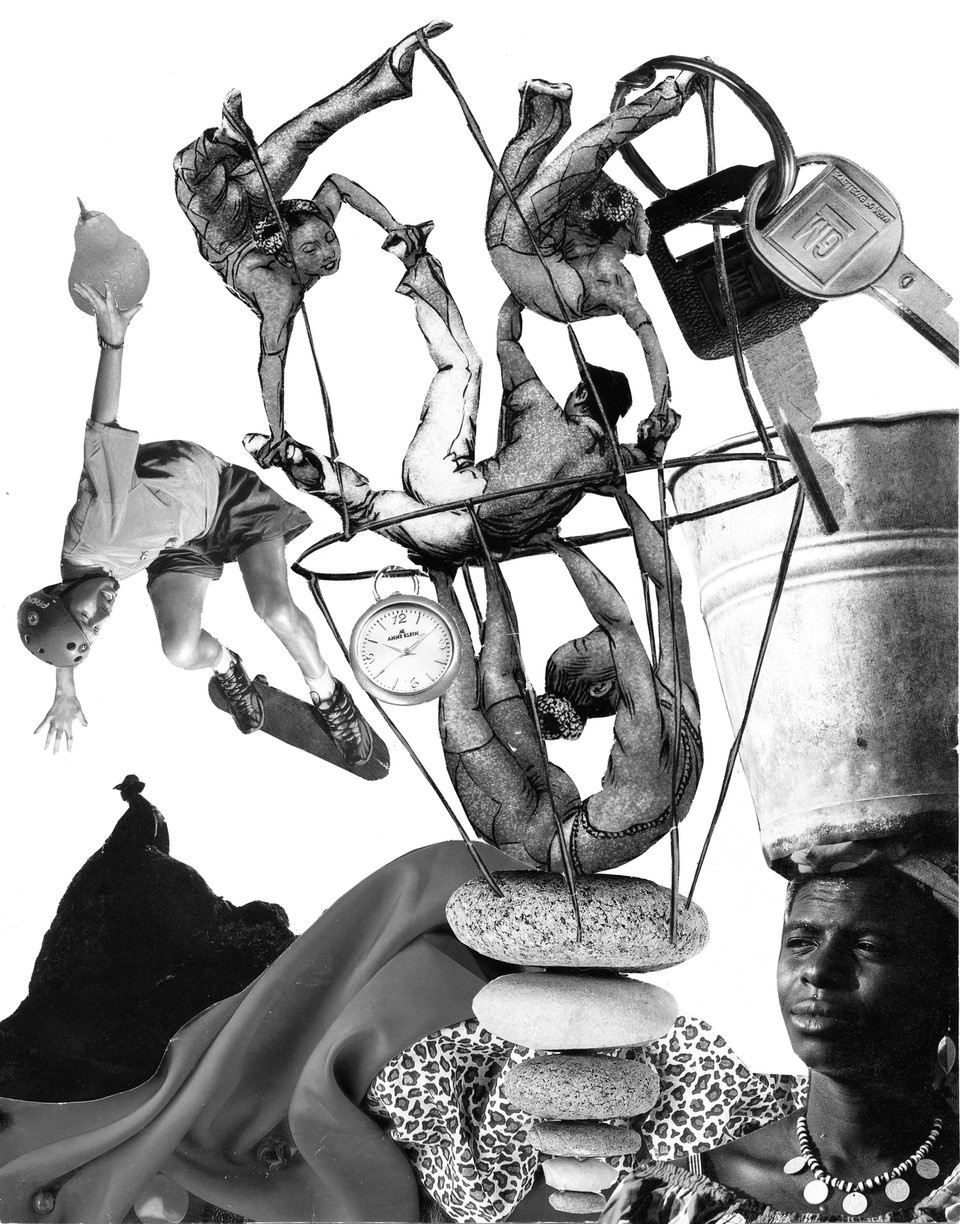
untitled by Zdzislaw Beksinski. Sanok Historical Museum, Poland
This issue of the Poetry Letter includes five books reviews: Shadows Thrown by Laura Ann Reed (Pauline Dutton); two book reviews by Michael Escoubas, shared from Quill & Parchment: Synergy by Kathy Lohrum Cotton & Michael Scott, M.D. and Alice’s Adventures: A Modern Version of Lewis Carroll’s Classic in Verse by Paul Buchheit; as well as reviews of Saffron Skies by William Scott Galasso (Maja Trochimczyk), and of Juliusz Erazm Bolek’s Ogród /The Garden in Polish and English (Jan Stępień), with two sample poems translated by Anna Maria Mickiewicz & Steve Rushton. The poems are published in the previous Part I of the Poetry Letter.
The illustration above is from surrealist paintings by Zdzisław Beksiński (1929-2005) - one of the most famous contemporary artists. His nightmare imagery of dark dreamscapes reveals a fascination with death and destruction. A famous film director Guillermo del Toro described Beksiński’s work as follows: "In the medieval tradition, Beksiński seems to believe art to be a forewarning about the fragility of the flesh – whatever pleasures we know are doomed to perish – thus, his paintings manage to evoke at once the process of decay and the ongoing struggle for life. They hold within them a secret poetry, stained with blood and rust.” Beksiński’s untitled paintings are open to interpretations by viewers and have been associated with visionary Romantic and surreal ideas, or with inspirations by Eastern mysticism. In 2001, the artist bequeathed his entire artistic output to the Historical Museum in Sanok, Poland where he was born. Currently, the Museum has the largest collection of his works in the world: several thousand paintings, reliefs, sculptures, drawings, prints, etc. Enjoy!
~ Maja Trochimczyk, CSPS President
PAULINE DUTTON REVIEWS SHADOWS THROWN BY LAURA ANN REED
20 poems, 40 pages, published by Sungold Editions. $17.25. ISBN 979-8-986729008
https://bookshop.org/p/books/shadows-thrown-laura-ann-reed/19469972?ean=9798986729008
Laura Ann Reed is a Pacific Northwest poet whose first chapbook, Shadows Thrown, offers poems of exquisite beauty and astounding images. Each trope in these poems rises out of lived feeling. This writer shows us how to endure hardship without losing human compassion and the joy of existing in a beautiful if imperfect world.
What I notice first about this book is its cover which features a stunning photograph by the artist Jacob Berghoef (https://www.saatchiart.com/jaapberghoef). The image seems to be of trees standing in a mist or fog which might be curtains, clouds, cracked rocks, or ghosts of the past. This mysterious photo is in conversation with the often ethereal and transcendent nature of the poems themselves.
The title poem offers a fine example of these qualities:
SHADOWS THROWN
In his death, my father meanders
among the Rose Garden’s stone terraces in the Berkeley Hills—
that vast amphitheater of wind and shifting light.
He stops, shades his eyes, squints at the Bay
and at the City beyond, its towers of steel and concrete,
its windows that glint in the lowering sun.
(I once floated rose petals
down Strawberry Creek while
he played tennis—set after set.)
He prayed he’d fall dead in old age after
acing a serve, his racquet clattering—
although it didn’t happen that way.
He glides by the courts, now, oblivious
to the cyclone fences and nylon nets.
He gazes instead at the shadows
thrown by roses onto the gravel paths,
or he slips into the small waterfall
where Strawberry Creek spills from
a ledge into a bowl of moss-covered rock. Other times,
he peers up at the living sky, hears traces of bright
laughter from the throat of his child, and quietly
enters the fog that drifts up the hill from the sea,
dissolving in a saline mist that begins to taste of him—
barely recalling the scent of grief.
The poem, Absolution, is also imbued with the feeling of “shadows thrown” by what has occurred in the past, and like Shadows Thrown, is marked by breathtaking imagery. Here’s an excerpt: “When will we get there? I’d say/ as my parents’ gray Chrysler rolled / over loose stones and weeds in the endless / dirt road that served as driveway. Dust flying up. / Windows open to the melancholy smell / of oranges fallen under trees—sweetness / sinking back into the soil. Those deep, green / shadows my own private Eden.”
An excerpt from the poem To a Sister I Didn’t Know sets the background from which these poems were written: the mother’s loss of six infants, which left the poet as the only child of a grieving and embittered mother.
“Who’d know you had curls the shade of ripe apricots. . .
That your death would feel like an indictment, an accusation. . .
That I’d dream of an orange kitten dying on a cyclone fence.”
As for dark humor, here’s Hell on Wheels, which describes her mother’s predilection for using her motorized wheelchair as a weapon:
HELL ON WHEELS
Those weren’t his exact words,
but then he didn’t grow up under
her steel thumb—.
or slashed by that well-honed tongue.
He could afford to be polite, the man
who took over her care
after my therapist advised me
to move out of state.
When we spoke long-distance by phone, he told me
other residents cringed in terror
when her motorized three-thousand-dollar wheelchair
rocketed in their direction.
He said my mother gazed straight ahead,
her painter’s smock streaming out behind her
as she raced to the art room. Mother—
ready to crush a toe, gouge a thigh, bash a knee.
Sometimes I see her rolling down a long corridor.
Despite polio-crippled limbs she flies
toward whatever version of Paradise
awaits her among brushes, turpentine, and tube of paint.
Her smock streaked with vermillion, emerald, topaz, indigo—
floats about her emaciated frame
like the wings of some exotic bird of prey
maddened by an unsated hunger.
I first became acquainted with this writer’s work with the poem How We Get the Final Word, published last year in Verse Virtual. I too had a difficult mother and I appreciated the poet’s capacity to articulate the humor in a less-than-ideal relationship with a parent.
HOW WE GET THE FINAL WORD (EXCERPT)
The room where we were sipping tea filled
with stillness, like the aftermath of earthquakes.
I should have kept to myself my plan to write about
her once she died. I didn’t mean to tell her, but I couldn’t
hold it back—the fact I’d get the final word.
With Shadows Thrown the poet does indeed get the final word. Order the book now, so you can savor more of her inspired and inspiring words.
~ Pauli Dutton, Altadena, California
Pauli Dutton is a Los Angeles-based poet and past co-editor of Altadena Poetry Review.
JAN STĘPIEN REVIEWS JULIUSZ ERAZM BOLEK’S OGRÓD /THE GARDEN
Juliusz Erazm Bolek Ogród /The Garden, Literary Waves Publishing, London 2022
Fascinated by the development of civilization (as expressed by Adam Ważyk in his poems), we moved away from the world of nature, destroying it in a cruel way. We are the only creatures that litter the environment in which we live.
Juliusz Erazm Bolek - realizing the effects of the lost bond with the world of nature - in his latest collection of poems "The Garden"— refers to a mythical paradise. Staying in it, the lyrical subject feels happy, fulfilled, internally harmonious. In this dream land, he feels safe. There are no fights here, no primitive noise. The affirmation of the natural world also has its source in the absence of material values that dominate our everyday life. It is these values that are the source of the clash of man with man. This struggle cripples us mentally and physically. In the poetic land of Juliusz Erazm Bolek, one listens to crickets, talks to flowers and birds.
The Garden consists of eighteen poems by Juliusz Erazm Bolek, which Are a record of dreams and longings for a lost paradise. Lost through our fault, because fascinated by civilization, we trampled the natural world. Most people, living in an ever-increasing rush, are lost in every- day matters. Juliusz Erazm Bolek breaks away from this race, uses mindfulness to focus attention on what is often overlooked. In this way, the Author reveals the world to the Readers - a lost paradise that is so distant, yet at your fingertips. The Poet's poems from The Garden collection are like a compass for anyone who wants to get out of the tangle of seemingly important matters. This is how Juliusz Erazm Bolek throws his poetic lifebuoy. In the Poet's poems, you can immerse yourself completely in the world where the sun reigns, at least for a moment, which will revive our sensitivity. It is a world of dreams for those who are characterized by high emotional development and above-average imagination. It is an almost perfect world, because there is no man who brings destruction.
Juliusz Erazm Bolek is a poet valued by various bodies. In 2010, he received the UNESCO World Poetry Day Award for his book Abracadabra. In 2017, his poem "Corrida" was awarded the title of "Book of the Year", and he himself received the Golden Pen award. In 2022, the Poet was named "Optimist of the Year", especially for the life-affirming poem "Secrets of Life. Poetic calendar.” Poems from the volume The Garden are a continuation of these affirmative ideas. The Garden by Juliusz Erazm Bolek is a bilingual collection. It was translated into English by the poets Anna Maria Mickiewicz and Steve Rushton. The book Ogród /The Garden was published by the British poetry publishing house Literary Waves Publishing in London. It is available worldwide on Amazon's online store.
~ Jan Stępień, London, UK
OGRÓD I
chcesz wrócić
do tego ogrodu
patrz
otwieram dłoń
jesteśmy między
na wpół uschniętymi drzewami
po których do Boga
pną się bluszcze
nikt tu nie zajrzy
nikt nie pamięta
o tym ogrodzie
i bądź spokojna
kiedy mnie kochasz
ten raj
nie wydaje owoców
a to jabłko
zjemy z pragnienia
GARDEN I
you want to come back
to this garden
look
I open my hand
we are in-between
half-dead trees
where ivy
climbs to God
no one will look
nobody remembers
this garden
be calm
when you love me
this paradise
will not bear fruit
and this apple
we eat out of thirst
OGRÓD II
znów jestem
w zapomnianym ogrodzie
tu jest bezpiecznie
tu jest spokojnie
nikt tu ze mną nie walczy
mimo że jestem intruzem
kocham miłość
i jej czerwony kolor
zrywam zaschnięte
dzikie małe wisienki
otwieram dłoń
i tańczę z samotnością
tańczę z ciszą
zza horyzontu
podgląda mnie
swoim zaczarowanym okiem
tajemnicze słońce
korony uschniętych drzew
dumnie i w spokoju
czekają końca świata
jest ze mną
mój wierny cień
i dobre wspomnienia
lata kipiącego
pocałunkami i pieszczotami
choć może tylko
tak mi się zdawało
że dosięgłem
najważniejszego
bluszcze i powoje
oplatają moje myśli
już nie wyrwę się
trawa porosła wysoko
nie dojrzę w niej
koniczyny szczęścia
nie widzę ścieżki
którą przyszedłem
patrzę w nadciągającą mgłę
może zanim mnie dosięgnie
odgadnę ile jeszcze
ogrodów mnie czeka
GARDEN II
I'm back
in a forgotten garden
it's safe
and quiet here
no one is fighting me
although I am an intruder
I love love
and its red colour
I pick dry
wild cherries
I open my hand
and dance with loneliness
dance with silence
beyond the
horizon
she’s watching me
with her enchanted eye
the
mysterious sun
crowns of withered
trees
proud and peaceful
awaiting the end of the world
he is with me
my faithful shadow
and
memories
of summer boiling
with kisses and caresses
though maybe only
I thought so
I’ve reached
the most important part
ivy and bindweed
entwine my thoughts
I won't escape
the grass has grown high
I will not find in her
the lucky clovers
I
can't see the path
I have come down
investigating approaching fog
before it reaches
guess how many
gardens wait
MICHAEL ESCOUBAS REVIEWS SYNERGY BY KATHY L. COTTON & MICHAEL D. SCOTT
Synergy: Poetry Collaborations by Kathy Lohrum Cotton & Michael D. Scott. 59 poems ~ 29 Illustrations ~ 106 pages, Independently Published. ISBN: 9798353225188
In an age of felt-isolation for many, I found something rare in Synergy, the bold new collaborative project between poet Kathy Lohrum Cotton and Michael D. Scott, M.D. What I found was a surprise, like a mule-kick in a barn lot. I have a friend who, suffering from deep depression, said to me, “There is no light, everything is dark.” As I prepared to write this review, my research took me to “How the Light Gets In” by Cotton. This turned out to be the mule-kick that changed my life and my friend’s life:
Ring the bells that still can ring
Forget your perfect offering
There is a crack, a crack in everything
That’s how the light gets in
The lines are from “Anthem” by Leonard Cohen. They form the basis of a “gloss” poem. Gloss poems amplify the lines from another poem by integrating them into a new poem. More on this later.
My friend needed an access to light, a way of thinking that let in fresh air. In these lines he found the “crack” that allowed “light” to get in. Synergy is worth its modest asking price if only for that!! But there is more. Much more. An elaboration of what “more” means in Synergy is the goal of this review.
Genesis of Synergy. Seemingly “out of the blue” Dr. Michael Scott, a relatively new poet, sent an email to Cotton with a challenge that they work on a collaborative project. (Both poets belong to the Illinois State Poetry Society.) Cotton agreed. Over time the project took shape and developed into a joint writing process which included “Collaborations,” “Word-count poems.” “Pairs,” (individual poems written on collaborative themes), and “Singles.” The singles stand alone and highlight each poet’s particular gifts. My sense is that both poets reached ever-deeper into their respective source-wells for “more.”
Synergy in Illustrations. Exquisitely designed by Cotton, 29 illustrations enhance the poems. They consist of black and white photographs and collage art. These are conveniently titled and catalogued in Synergy’s front matter. I was emotionally moved as I considered art and text together.
Synergy in Concept & Process. Merriam-Webster defines synergy as “a mutually advantageous conjunction or compatibility.” Poet Neil Blumenthal adds, “A good collaboration pushes the boundaries of both partners.” Creative patterns reflecting these cornerstone concepts, began to take shape. Scott chose themes and wrote opening lines/stanzas; Cotton responded, their writing going back and forth with Cotton supplying closing lines/stanzas. Synergy offers a roadmap for other poets who aspire to write collaborations.
Synergy in Text and Form. Kathy Lohrum Cotton is a seasoned poet with a long list of design and publication credits. Michael D. Scott, M.D., is an ER doctor, and relatively new poet. Had anyone told me that such a mix could produce a work of such quality, I would not have believed them. Shows what I know. These two artists have produced a work of near-seamless fluidity. “The Balance of Peace,” sets the tone. I have italicized Cotton’s lines. The collage is appropriately titled “Balance.”
THE BALANCE OF PEACE
There is a peace and solitude in having
spare parts, spare change, spare chances—
a hearts-ease security in one day’s surplus
magpied for the nest of a leaner day.
Peace, though vexed when scouting
and foraging exceed excess,
can grow at ease in the simple balance
of enough and not too much, sparing itself
the collective groans of junk drawers, garages,
cushions and hearts that obscure solitude’s moans
and smother the quiet conscience beneath
a cacophony of acquisition and upkeep.
Here, savor metamorphs and emerges anew:
lithe, frugal, feathered, reposed—
its goodness winging away from the tug of life’s stuff,
grateful for every spare chance to find peace.
Synergy through Topic Selection. Synergy engages life where readers live. “In the Raw,” explores strategies we use to cover up who we really are. What do we do in life when the most to gain and the most to lose coincide? Another poem uses alternating tercets to highlight five aspects of touch. “On the Brink of a Bridge,” challenged your reviewer to consider what it means to follow my dreams even if doing so means crossing an uncertain bridge. This poem is amplified by a figure crossing a chasm over a swaying suspension bridge. These examples barely scratch the surface of Cotton and Scott’s intellectual and emotional depth.
“Flatline” highlights Michael Scott’s medical background fleshed out in poetry.
Up.
Up, up. Then, in a fleet swing downward. To flat.
Oh! But a shock, a jolt, a quickening, raises—
Only to dissipate in a moment, as natural
Equilibrium ensues.
Which is more natural? The up? The flat?
The flux between? Flux is constant, except
At our nadir
Where zero has both change and say so.
Up and not up is life, but
Recurrent awakenings from deaths are
Un-merry-go-rounds for faint hearts;
Devastating roller-coaster rides with short-lived
Thrills; screams galore at point naught.
Tangents intersection no more, ghost
Blips, flittering, from an unknown depth
On a blank screen, the blankest of screens.
Blips once spirited, heaven-prone, and gravid with potential,
That once showed life, level silent, to a flattened memory,
of you.
I mentioned at the beginning more to come about Cotton’s gloss poem “How the Light Gets In.”
The last two stanzas, I think, bring Cotton and Scott’s collaboration full circle. This collections is more, much more than two talented people who discovered one another. This volume bores in on life. Cotton and Scott, herald with one voice:
There is a crack, a crack in everything,
the armor’s chink, a cleft in stone,
inherent flaws within us all.
No brokenness is borne alone,
we climb together and we fall.
There is a crack, a crack in everything—
that’s how the light gets in;
how beauty pierces ugliness,
and fractured wrongs reveal the right,
the darkness split in suddenness
like sunrise overcoming night.
That’s how the light gets in.
~ Michael Escoubas first published in Quill & Parchment
MICHAEL ESCOUBAS REVIEWS ALICE’S ADVENTURE BY PAUL BUCHHEIT
Alice’s Adventures: A Modern Version of Lewis Carroll’s Classic in Verse. Published by Kelsay, ISBN: 978-1-63980-183-1. 15 chapters ~ 25 color illustrations ~ 58 pages
In an age where rhyme seemingly has fallen out of vogue, Paul Buchheit has just revived it. Alice in Wonderland is an artistic fairyland, written in Alexandrine rhyming couplets. The Alexandrine or Iambic Hexameter line features 12 syllables, perfect for what occasions its use. Iambic feet facilitate a walk- along cadence as the story unfolds. I scanned lines at random and was impressed. Yep, 12 syllables in each line. Buchheit tells Alice’s story without a hint of forced rhyming. None of this, “Well, now I’ve gotta come up with a rhyme, oh, gosh, let me check with rhyme-zone.” Not a chance, this poet’s product is as smooth as gravy on mashed potatoes!
Historical Sketch
Lewis Carroll (1832-1898) wrote his fantasy in 1862. Its protagonist was Alice Liddell. The penname for Charles L. Dodgson, the author was a poet, illustrator, storyteller, and mathematician. Close to Alice and her family, Carroll created his story at 10-year-old Alice’s, request. The narrative was written while on a boating and picnicking trip near Oxford, England, with Alice and her sisters. Over time the story became one of the most popular examples of the fantasy genre. Alice in Wonderland enjoyed critical acclaim which led to a sequel, Through the Looking Glass. The original story, in later years, became a significant source of income and notoriety for Ms. Liddell.
Boredom, Talking White Rabbits, and Falling, Falling, Falling
While many have tried to attach political, psychological, or religious undertones to Alice in Wonderland, your reviewer chooses to treat it as a child’s imaginative journey. Indeed, Paul Buchheit transports himself seamlessly into a child’s world. (More of us should be so inclined!) The narrative is structured in 15 brief chapters, just the right length for a bedtime read:
How bored was Alice! Sitting by the riverside,
With nothing much to do, her sister occupied
beside her with a book, a dullish exercise
without a single page of art to please her eyes
In fact, Alice is lazy. Rather than move about picking daisies (an option requiring motivation and energy), she chooses to lay down and dream. Remarkable things happen:
........ As she rested, though, a white
and wide-eyed rabbit hurried by, a pleasant sight
but unremarkable enough on normal days,
yet now there came about a matter to amaze
a little girl in any mood: the rabbit talked!
“Oh dear, oh dear, I shall be late!” he said and walked
Of course, Alice, to her chagrin, could not get over how “unbunnywise” all of this was. She gives herself over to the ever-increasing evocations of her hyperactive imagination. Once in the rabbit hole, Alice finds tiny doors, drinks a potion that shrinks her just enough to squeeze through. Then, inexplicably, her size increases, which presents another set of challenges enough to make Alice sit and
weep.
Animals and a Hookah-Smoking Caterpillar
Masterfully illustrated by Manahil Khan, Alice in Wonderland presents a stunning array of animals:
As Alice shrunk again, a freakish episode
began: a nearby pool of water overflowed
with parrots, eagles, dodos, ducks, and many more.
So Alice led the crowd of animals to shore.
What Buchheit does with these animals and more, in his world, will make you shudder with delight! Your reviewer got so involved he had to remind himself that this is merely fantasy!
I would be remiss by did not mentioning the “Hookah-Smoking” caterpillar. Unfamiliar to me, I resorted to the Internet to learn more about hookah pipe. What I found out was an education. I encourage the reader to do the same.
The Cheshire Cat, Mad-Hatter and Waking Up
As Alice continues her journey, the pace quickens with the introduction of many new characters and impossible experiences made possible as only fantasy can do. The Cheshire cat helps Alice find her way to the Mad-Hatter’s mad tea party, then goes away but leaves his grin behind!
As in all good dreams, the dream must come to an end. As her sister gently wakes her up, Alice muses:
..... “Oh dear, I dreamed
so very much, and everybody IN it seemed
so curious,” . . . . . . . . .
In an age of “brutal” realism and “brazen” presentation of life the world of Alice in Wonderland is a welcome and delightful respite.
~ Michael Escoubas first published in Quill & Parchment
MAJA TROCHIMCZYK REVIEWS WILLIAM SCOTT GALASSO’S SAFFRON SKIES
Galwin Press, 2022 ISBN 978-1-7327527-3-3, paperback, 128 pages
The seventeenth book of poetry by William Scott Galasso, Saffron Skies, brings to its readers a feast of haiku, senryu, tanka, and haibun inspired by travel, nature, art, and the experience of life in all its fleeting beauty. These are insightful and well-crafted poems and the book is a delight to savor slowly, returning to each miniature to savor its flavor. I must say I have a strong preference for “silver-haired” poets whose work has stemmed from decades of living, in short, from wisdom. As Galasso writes “Once I rebelled, raced, / raved against time / now / I flow with it/ a leaf on a stream.” This is not resignation or capitulation to the inevitability of aging, but a profound insight into the art of living in the present, in the here and now.
Galasso’s keen power of observation merges with his sense of humor as notices “first snow / the powdered nose / of our terrier.” His humor is sometimes wry: “IRS refund / one full tank / of gas.” He also knows what makes a relationship work: “it’s not the card / it’s not the flowers… / I do dishes.” The reader has to smile reading his gems of domestic bliss. Galasso’s focus in many poems is finding joy in the quotidian, kindness and contentment while surrounded by friends, children, grandchildren.
He notices the child’s wonder: “pinwheel / stirred by the breeze / this May Day morning / the sheer delight in her four-year old eyes.” He shares with the reader the sound of happiness: “best sound / I’ve heard all day / baby’s chuckle.” He observes the absurdity of his surroundings: “senior village / the sidewalk chalked / for hopscotch.”
Not all is smiles and giggles in Galasso’s world, as he writes about the past two years of pandemic lockdowns, the suffering of refugees, the disaster of wars, including the most recent war in the Ukraine, the lies of politicians, and the suffering and separation of deaths and divorces in the family, among friends. The magic of haiku and tanka lies in capturing such serious issues in few words, selected with care to vividly express the essence of an issue: “quarantined… /all the places / I would go.” There is a sigh and wishful thinking in this short line, expressing the loneliness and helplessness of “public health” captives.
When I was a child, my mother used to wash our mouths, mine and my brother’s, with soap if she heard us bringing a curse home from the playground. It happened to me at least once, and I still remember the smooth, annoying taste, so I entirely sympathize with Galasso’s observation about “politics… / where’s that bar of soap / when needed.”
It is hard to convey the utter disaster of war to those who have not lived through it, who think that war could ever be won. There are no victors in wars, only losers, the greatest loss is that of young, promising life. The suffering of war is articulated by small, poignant details: “nicked artery / the pulse of red / on green fatigues.” I read Galasso’s book when listening to Bulat Okudzhava’s ballads in the original Russian, the favorite songs of my Belorussian father (who was a teen witness of war, not its participant). For four decades after the end of World War II, this Russian folk singer, popular throughout Eastern Europe until today, was able to share and highlight the feelings of senselessness and despair, ridicule the vain promises of rulers, give voice to the soldiers’ hope of survival. His war was a flock of black birds swirling in the darkened sky, the heavy hearts of women left behind by infantry soldiers marching off to battle in their hard-toed boots, flimsy uniforms, with shaved heads, disappearing in the mist. Cogs in an infernal machine…
If Bob Dylan could win the 2016 Nobel Prize for Literature, so should Okudzhava (Georgian-Armenian poet, composer, guitarist, and writer, b. 1924), whose poems and music helped generations of people enslaved by the Soviet empire in the Eastern European countries survive in the inhuman system. Communism was compared by Polish writer Stefan Kisielewski to an “insect society” where everyone stomps and crawls over everyone else, and all serve the evil rulers ensconced in the Kremlin. All citizens of countries left behind the Iron Countries were sold out and abandoned by their Western “allies” who signed a treaty with Stalin. Yes, politicians should have their dirty mouths washed out with soap…
The most inspirational poems of Galasso in Saffron Skies are those about friendship and universal kindness, extending to the beauty of nature. Yes, there is an antidote to lies, wars, pandemic. It is when “friends gather / a full year’s / worth of hugs”. This healing tonic may be found in extended families, not the “nuclear families” that communists want to replace with strangers and government workers teaching the “flavor of the hour”official ideology, but the full, multi-generational family clans, full of affection and relatives’ antics: “family album / bear hugging uncles / cheek-pinching aunts / I hear their laughter again / remember their tallest tales.” This is what makes human society human – people we love and people who love us. This love is first and foremost inherited, increasing in concentric circles from immediate families of parents and children, to aunts, nephews, uncles, nieces, granddads, grandmoms... Then come the neighbors, the compatriots that share communities, languages and cultures… until we arrive upon our shared humanity, spread over the whole planet. We are all One – it is too easy to forget these days...
The whole planet is full of life, and Galasso looks and walks carefully through his world, in kindness: “big feet / little cricket sharing / space.” There are many poems inspired by Galasso’s travels to the ocean shores and mountains of our beautiful continent. He is content to be “moongazing / the coyote / and I.” He admires the nature’s power of clashing continental plates, volcanoes, and waves. He responds to the reflection of the natural beauty in the eyes of the beloved.
His poems, organized in a calendar cycle from New Year’s through the seasons and holidays of Christmas, spring equinox, summer solstice, autumn and Thanksgiving, portray the beauty of human art (Hopper, Whitman, folk singers) and human cities, as well as the magic of the natural world. Galasso’s book is a document of a consummate skill of a master word-crafter who can conjure up whole worlds in a few lines, capture the passing of time, gaze in awe at the shifting clouds and untangle complex emotions. His highly-recommended book features many poems that call for repeated reading. One of my favorites is a haibun that I’ll quote in its entirety to end my review:
Sipping coffee, morning fog burns off, apricot sun, hues of blues in sea and sky, thud of sandals on the boardwalk descending to beach, now barefoot, ahh cool sand, cool water lapping feet, waves crest the manes of horses running, their rhythmic canter hypnotic, seals resting on rookery, some heads bobbing in seaweed, feasting on fish. Sandpipers, terns, cull the tideline, a chevron of pelicans skim the rollers curling in
Night: my wife and I, hand-in-hand make our way to the lookout point, light from inns and boutique hotels, paint the ocean softly. We resist the chill, arms encircled, standing silently on the bluff’s perch, a sliver of moon, planets, constellations, Heaven’s River, stars in obsidian countless diamonds, black and white in harmony
~ Maja Trochimczyk, Los Angeles, California
Beach and garden photos by Maja Trochimczyk
%20(1).jpg)